Since we published SuperQode 2.5, the work on the terminal has been about making the harness usable as a daily coding surface: connect a provider or an agent, stay in […]
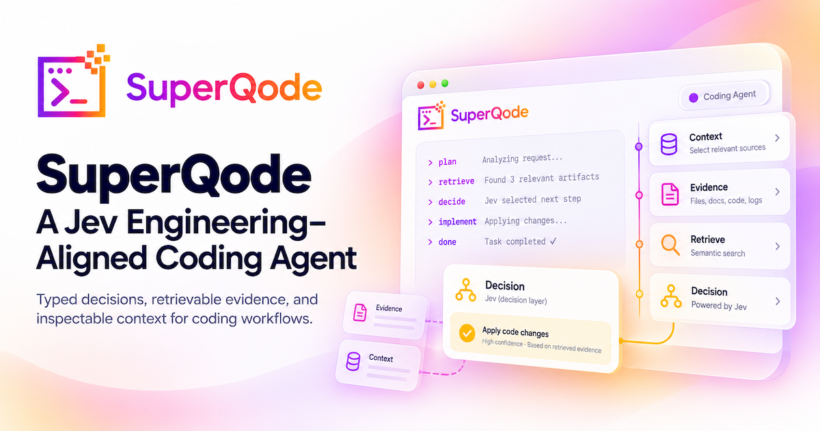

Since we published SuperQode 2.5, the work on the terminal has been about making the harness usable as a daily coding surface: connect a provider or an agent, stay in […]
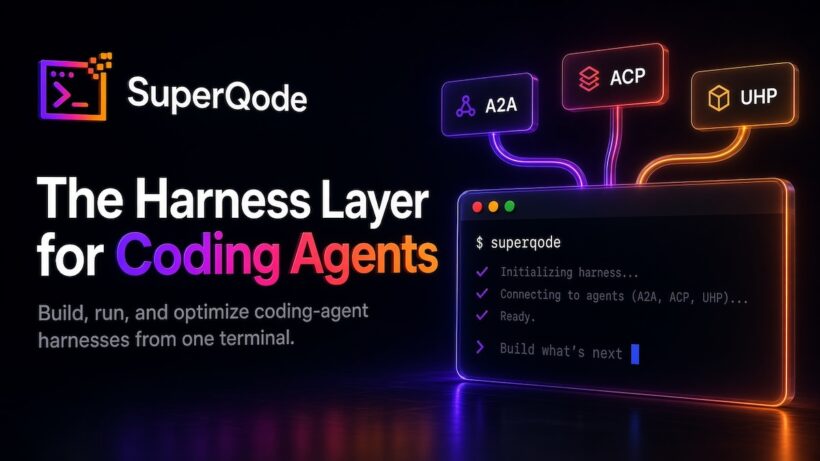
Today we are announcing SuperQode v2, the harness interoperability layer for coding agents. It is Apache-2.0, installs in one line, and leads with full Agent2Agent support, a hosted A2A agent […]
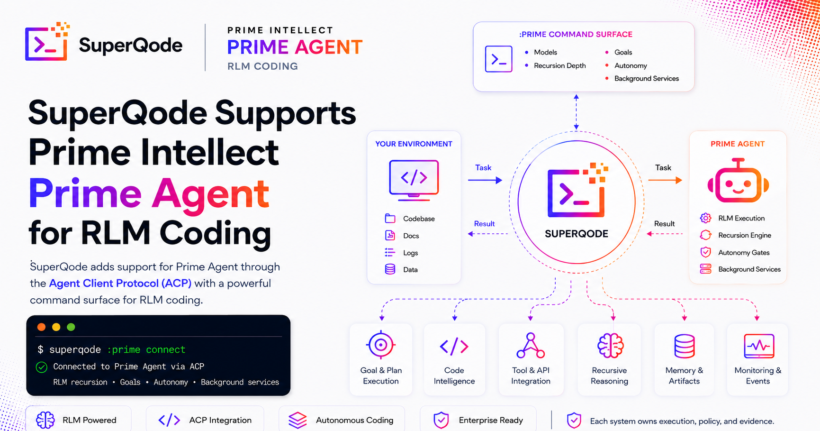
Prime Intellect released Prime Agent. The agent was developed for coding workflows and long-running autonomous tasks, and it is built on the Recursive Language Model (RLM) approach. SuperQode adds support for Prime Agent through […]
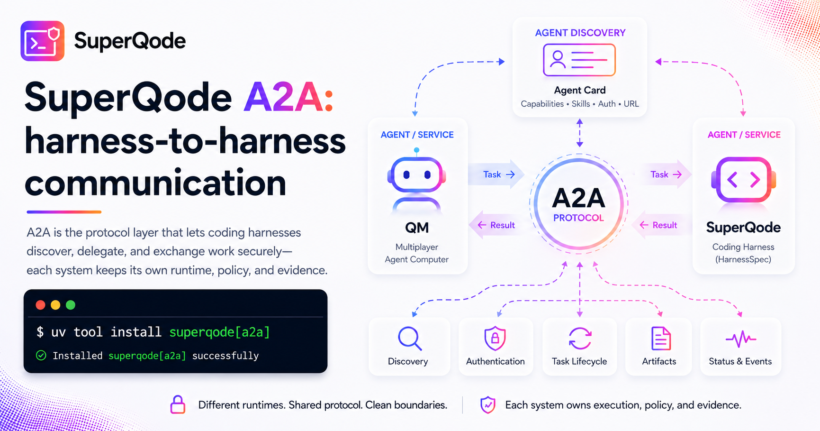
Coding agents no longer live only inside one terminal session. Some products act like company computers, with shared rooms, durable sandboxes, and Slack or web surfaces. Others treat the harness […]
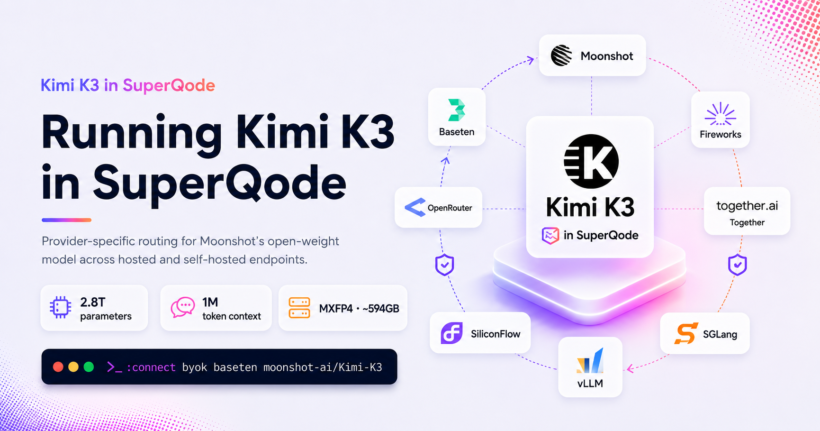
Moonshot published the Kimi K3 weights. The model is 2.8 trillion parameters with a 1 million token context window, shipped in MXFP4 at roughly 594GB. Within a day it was […]
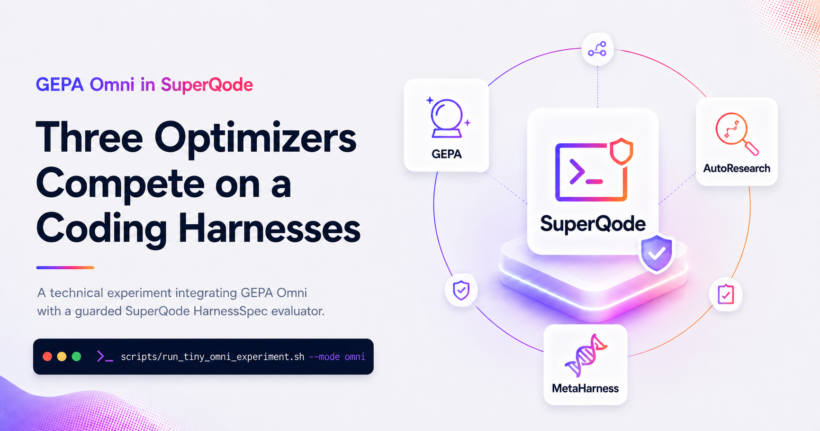
The team behind GEPA has just released the Omni to make agent optimisation unified. SuperQode, our agent engineering platform for coding factories has already integrated this and experienced with tit for […]
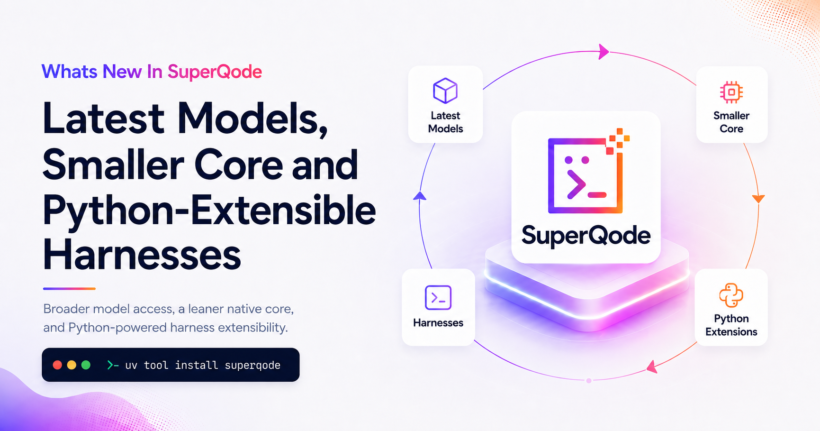
The coding-model landscape is moving faster than the software around it. In the space of a few weeks, OpenAI introduced GPT-5.6, xAI released Grok 4.5, Meta launched Muse Spark 1.1, […]
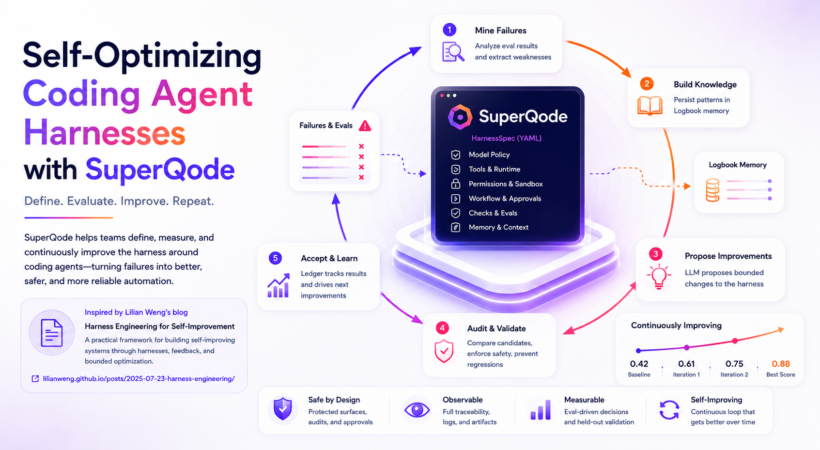
Coding agents have become a practical part of software development workflows. Tools such as Codex-style agents, Claude Code-style agents, OpenCode-style agents, and IDE-integrated assistants are increasingly good at reading repositories, […]
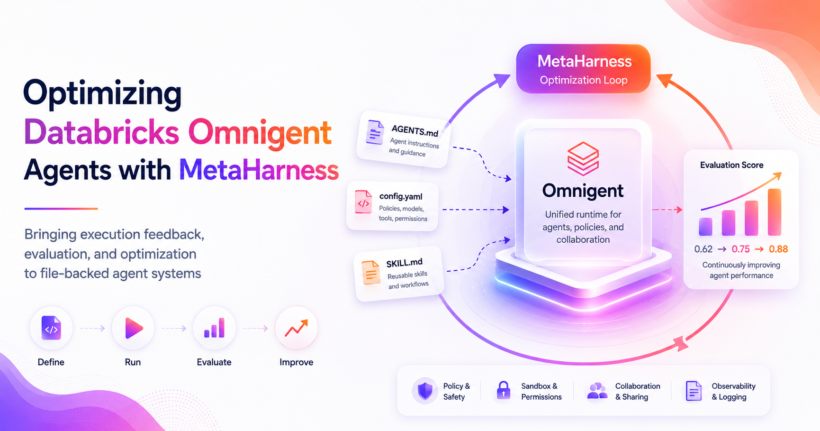
Databricks has just released the Omnigent the meta-harness for the AI agents. It is timely that Superagentic AI released meta-harness library few months ago. These meta-harness concepts sounds same but they […]
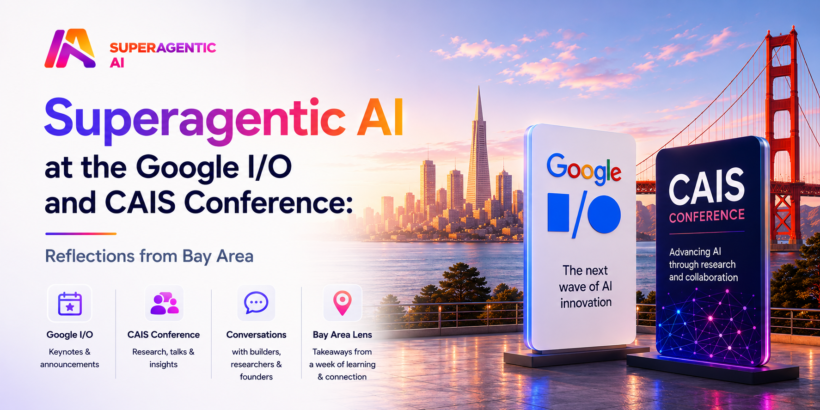
Last week, I returned to London from the San Francisco Bay Area with renewed energy, fresh insights, and a deep appreciation for the people driving artificial intelligence forward. Since back, […]